Adenosine Triphosphate (ATP)
Introduction to Adenosine Triphosphate
Adenosine triphosphate (ATP) is a fundamental biological molecule responsible for storing and transferring chemical energy in living cells. Often described as the primary energy currency of the cell, ATP supports a wide range of biological activities, including cellular metabolism, muscle contraction, active transport, protein synthesis, and intracellular signaling.
ATP is present in virtually all living organisms, from bacteria and fungi to plants and animals. Its central role in energy metabolism makes it essential for maintaining cellular organization, regulating biochemical reactions, and supporting normal physiological functions.
Beyond its biological importance, ATP is also widely used as an analytical target in laboratory applications. Its presence in biological materials makes it useful for evaluating organic residues on environmental surfaces through rapid ATP detection technologies. These methods are particularly relevant to hygiene monitoring, cleaning verification, pharmaceutical manufacturing, healthcare facilities, and food processing environments.
Understanding the molecular structure, biochemical properties, and detection principles of ATP provides an important foundation for both cellular biology and modern analytical applications.
Phosphoanhydride Bonds and Energy Transfer
The phosphate groups of ATP are connected through phosphoanhydride bonds. Hydrolysis of the terminal phosphate group can release free energy that cells use to drive thermodynamically unfavorable reactions.
The hydrolysis reaction is commonly represented as:
ATP + H2O → ADP + Pi + Energy
In this reaction, ATP is converted into adenosine diphosphate (ADP) and inorganic phosphate (Pi).
Under standard biochemical conditions, the standard transformed Gibbs free energy change for ATP hydrolysis is approximately -30.5 kJ/mol. The actual free energy change inside cells varies according to ATP, ADP, inorganic phosphate concentrations, pH, and other biochemical conditions.
ATP is therefore not simply an energy storage molecule. It acts as an intermediate that couples energy-releasing metabolic reactions with energy-consuming cellular processes.
Biological Functions of Adenosine Triphosphate
ATP participates in numerous biological processes and is essential for maintaining cellular activity. Its functions extend across metabolism, transport, structural organization, molecular synthesis, and signaling pathways.
Cellular Energy Metabolism
ATP provides the chemical energy required for many cellular reactions. Energy released during nutrient oxidation is captured through metabolic pathways and used to regenerate ATP from ADP and inorganic phosphate.
This process allows cells to maintain a continuous supply of usable chemical energy.
Active Membrane Transport
Many membrane transport proteins require ATP hydrolysis to move substances against their concentration or electrochemical gradients.
The sodium-potassium ATPase is a well-known example. It uses ATP to transport sodium ions out of cells and potassium ions into cells, helping maintain membrane potential, cellular volume, and ionic balance.
Other ATP-dependent transporters participate in calcium regulation, nutrient uptake, and the movement of molecules across cellular membranes.
Protein Synthesis
ATP supports several stages of protein synthesis, including amino acid activation and the preparation of molecules involved in translation.
Aminoacyl-tRNA synthetases use ATP to attach specific amino acids to their corresponding transfer RNA molecules. This process is essential for accurate protein production.
Muscle Contraction
ATP is required for the interaction between actin and myosin during muscle contraction.
ATP binding to myosin promotes its detachment from actin, while subsequent ATP hydrolysis helps prepare the myosin head for another contraction cycle.
Continuous ATP regeneration is therefore necessary for normal muscle function.
Intracellular Signaling
ATP also participates in cellular communication and signal transduction.
It serves as a phosphate donor for protein kinases, which regulate the activity of numerous proteins through phosphorylation. These reactions influence metabolism, cell growth, differentiation, gene expression, and responses to environmental signals.
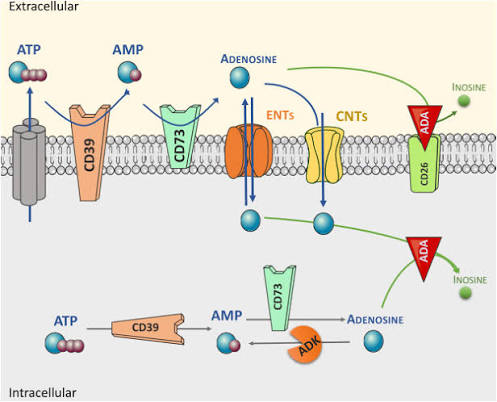
ATP can also function as an extracellular signaling molecule through purinergic receptors involved in inflammatory responses, neurotransmission, and tissue regulation.

ATP Production and Cellular Metabolism
Cells continuously regenerate ATP through interconnected metabolic pathways. The relative contribution of each pathway depends on cell type, oxygen availability, nutrient supply, and metabolic requirements.
The major ATP-producing processes include glycolysis, the citric acid cycle, and oxidative phosphorylation.
Glycolysis
Glycolysis is a metabolic pathway that takes place in the cytoplasm and converts one molecule of glucose into two molecules of pyruvate.
During this process, ATP is generated through substrate-level phosphorylation. Under standard conditions, glycolysis produces a net gain of two ATP molecules per glucose molecule.
Glycolysis can operate in the presence or absence of oxygen, although the metabolic fate of pyruvate depends on cellular conditions.
Citric Acid Cycle
The citric acid cycle, also known as the Krebs cycle or tricarboxylic acid cycle, takes place primarily in the mitochondrial matrix in eukaryotic cells.
It oxidizes acetyl-CoA and generates reduced electron carriers, including NADH and FADH2.
The cycle also produces one molecule of GTP or ATP per turn through substrate-level phosphorylation, depending on the organism and enzyme system.
These reduced electron carriers subsequently provide electrons to the respiratory chain.
Oxidative Phosphorylation
Oxidative phosphorylation takes place in the inner mitochondrial membrane of eukaryotic cells.
Electrons from NADH and FADH2 pass through the mitochondrial electron transport chain, generating a proton gradient across the inner membrane.
ATP synthase uses the energy stored in this electrochemical gradient to synthesize ATP from ADP and inorganic phosphate.
Oxidative phosphorylation is the major source of ATP in many aerobic cells and supports their continuous energy requirements.
ATP, ADP and AMP: Understanding Cellular Energy Balance
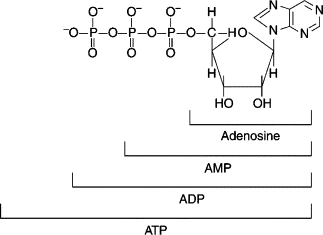
ATP is part of a dynamic nucleotide system that includes adenosine diphosphate (ADP) and adenosine monophosphate (AMP).
These molecules are interconnected through phosphorylation and dephosphorylation reactions.
When ATP is hydrolyzed, it can form ADP and inorganic phosphate. ADP can subsequently receive another phosphate group through metabolic processes to regenerate ATP.
AMP is produced through several metabolic reactions, including the conversion of ADP molecules by adenylate kinase.
The relative concentrations of ATP, ADP, and AMP provide information about cellular energy status.
The adenylate energy charge is one way of expressing the energetic condition of a cell. It is calculated as:
Energy charge = ([ATP] + 0.5 × [ADP]) / ([ATP] + [ADP] + [AMP])
Values closer to 1 indicate a relatively high-energy state, whereas lower values indicate a reduced cellular energy status.
Changes in adenylate concentrations can influence metabolic regulation through pathways involving AMP-activated protein kinase (AMPK), an important regulator of cellular energy homeostasis.
ATP in Cellular Regulation and Biochemical Signaling
In addition to its role in energy transfer, ATP participates in multiple regulatory mechanisms.
Protein phosphorylation is one of the most important ATP-dependent processes in cellular signaling. Protein kinases transfer phosphate groups from ATP to specific amino acid residues in target proteins.
This modification can change protein activity, localization, stability, and interactions with other cellular components.
ATP also contributes to the regulation of molecular chaperones, cytoskeletal proteins, and enzymes involved in metabolic control.
In the extracellular environment, ATP can be released by cells in response to mechanical stress, tissue damage, or physiological stimulation.
Extracellular ATP interacts with purinergic receptors, including P2X and P2Y receptor families. These receptors participate in calcium signaling, inflammatory regulation, immune responses, and communication between neighboring cells.
Analytical Detection of ATP
ATP detection is an important analytical application of this molecule's biological distribution and biochemical properties.
Because ATP is present in living cells and biological materials, its detection can provide information about organic residues collected from surfaces.
ATP-based testing is widely used in hygiene monitoring and cleaning verification programs. It provides a rapid measurement that can complement visual inspections and conventional microbiological techniques.
The most common analytical approach relies on a bioluminescence reaction involving the enzyme luciferase and its substrate luciferin.


Principle of the ATP Bioluminescence Assay
The ATP bioluminescence assay is based on the light-producing reaction catalyzed by luciferase.
In the presence of ATP, luciferin is converted into an excited reaction product through an enzymatic oxidation process. When this product returns to its ground state, light is emitted.
The emitted light is measured using a luminometer. Under controlled conditions, the intensity of the signal is related to the quantity of ATP present in the sample.
The reaction can be represented in simplified form as:
Luciferin + ATP + O2 → Oxyluciferin + AMP + PPi + Light
This reaction provides the basis for rapid ATP measurement in a wide range of analytical applications.
ATP Testing in Hygiene Monitoring
ATP testing is widely incorporated into environmental hygiene programs because it provides rapid information about surface cleanliness.
Traditional cleaning assessments may rely on visual inspection, which cannot detect all organic residues. ATP measurements offer an additional analytical approach for evaluating the effectiveness of cleaning procedures.
Cleaning Verification
ATP testing can be performed after cleaning activities to assess the presence of detectable ATP residues.
Results can be compared with predefined acceptance criteria to determine whether additional cleaning or investigation may be required.
Environmental Monitoring
ATP measurements can be collected from different sampling locations to evaluate hygiene conditions across a facility.
Repeated measurements provide useful information about cleaning consistency and may help identify surfaces that frequently produce elevated readings.
Quality Assurance
ATP testing can support internal quality assurance activities by providing documented measurements of surface cleanliness.
When integrated into a structured monitoring program, the results can contribute to cleaning performance reviews, corrective actions, and continuous improvement initiatives.
Applications in Pharmaceutical, Healthcare and Food Industries
Pharmaceutical Manufacturing
In pharmaceutical manufacturing, ATP measurements can complement cleaning verification activities and support routine hygiene assessment.
They may be used on selected production surfaces, equipment, and workstations as part of broader contamination control strategies.
ATP testing does not replace validated cleaning procedures, microbiological monitoring, or other regulatory requirements.
Healthcare Facilities
Healthcare environments require consistent cleaning practices to reduce environmental contamination risks.
ATP swabs can help evaluate cleaning performance on selected patient-care surfaces, medical equipment, and frequently touched objects.
The rapid feedback provided by ATP testing can support staff training and hygiene improvement initiatives.
Food Processing
ATP detection is useful for monitoring food-contact surfaces and processing equipment.
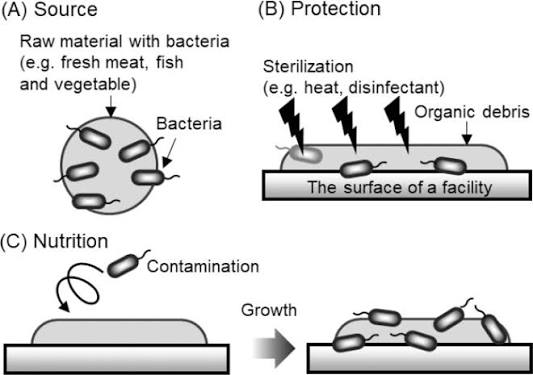
It can provide rapid information about organic residues remaining after cleaning and support the implementation of preventive hygiene procedures.
ATP testing should be combined with appropriate microbiological methods when microbial contamination needs to be evaluated.
Industrial Environments
Industrial facilities can incorporate ATP monitoring into cleaning verification programs for production areas, shared equipment, packaging systems, and operational workspaces.
The approach supports consistent surface assessment and helps organizations evaluate cleaning performance over time.

Factors Influencing ATP Detection and Measurement Accuracy
Several analytical and environmental factors can influence ATP measurement results.
Sample collection: Differences in sampling pressure, area, and technique may affect the amount of ATP recovered.
Surface composition: Porous and irregular materials may produce different recovery rates compared with smooth surfaces.
Chemical residues: Some cleaning products and disinfectants can interfere with the bioluminescence reaction.
Reagent quality: Enzyme activity and reagent stability are essential for consistent signal generation.
Instrument performance: Luminometer sensitivity, maintenance, and compatibility with sampling materials influence measurement reliability.
Environmental conditions: Temperature, storage conditions, and handling procedures may affect the analytical response.
Standardized methods and appropriate quality control procedures help reduce these sources of variability.
Conclusion
Adenosine triphosphate is an essential molecule that connects cellular energy metabolism with a wide range of biological functions. Its role in biochemical reactions, membrane transport, protein synthesis, muscle contraction, and cellular signaling makes it fundamental to life.
Its biochemical properties also make ATP an important target for analytical detection. Through bioluminescence technology, ATP swabs, and luminometer-based measurement, ATP can be rapidly detected in biological samples and environmental surface residues.
From cellular research to pharmaceutical manufacturing, healthcare hygiene, and food processing, ATP detection provides valuable analytical information when used within appropriate monitoring procedures.
A thorough understanding of ATP structure, metabolism, and detection principles supports the development of reliable laboratory methods and more effective hygiene assessment strategies.
